Sacred Architecture
Where light, ritual and silence shape the architecture of the soul
Sacred Space as an Architecture of Light, Peace and Ritual
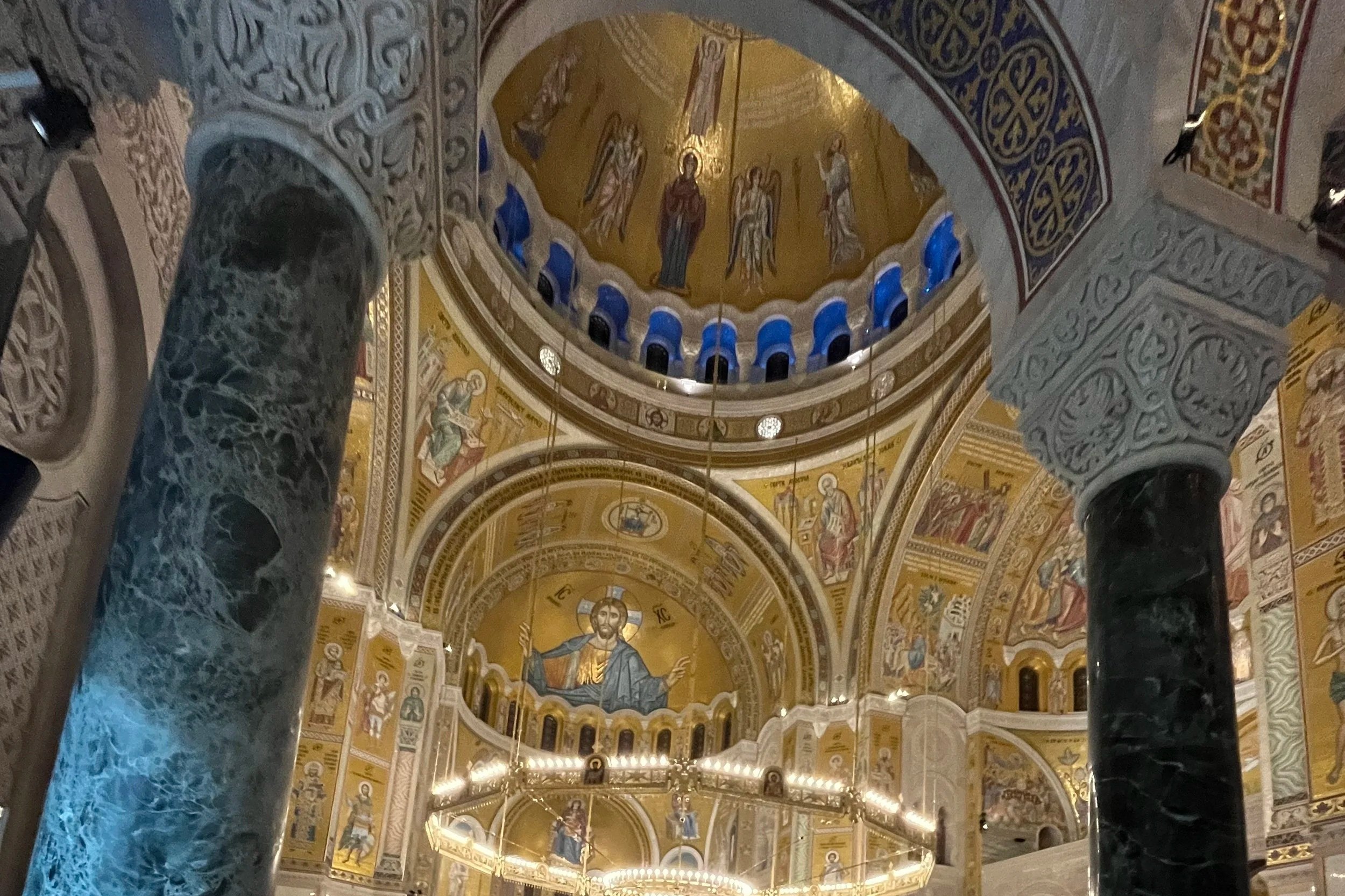
Sacred architecture has always been more than the construction of religious buildings. It is the creation of an atmosphere in which space becomes capable of holding silence, ritual and spiritual presence. Within Christian tradition, the church interior is shaped through light, proportion, material, iconography and movement, forming a place where the visible world opens toward contemplation and peace.
This research interest explores the way sacred spaces are experienced through the body and the senses how light descends into the interior, how ritual gives rhythm to space, how material surfaces receive shadow, and how architecture creates serenity. The sacred is not only represented through symbols; it is felt through atmosphere.
To be continued…
Space as an Integral Aspect of Performance experience
Space as Performance Experience
Spatial Design, Scenography and the Atmosphere of the Theatrical Event
Space as Performance Experience
Spatial Design, Scenography and the Atmosphere of the Theatrical Event
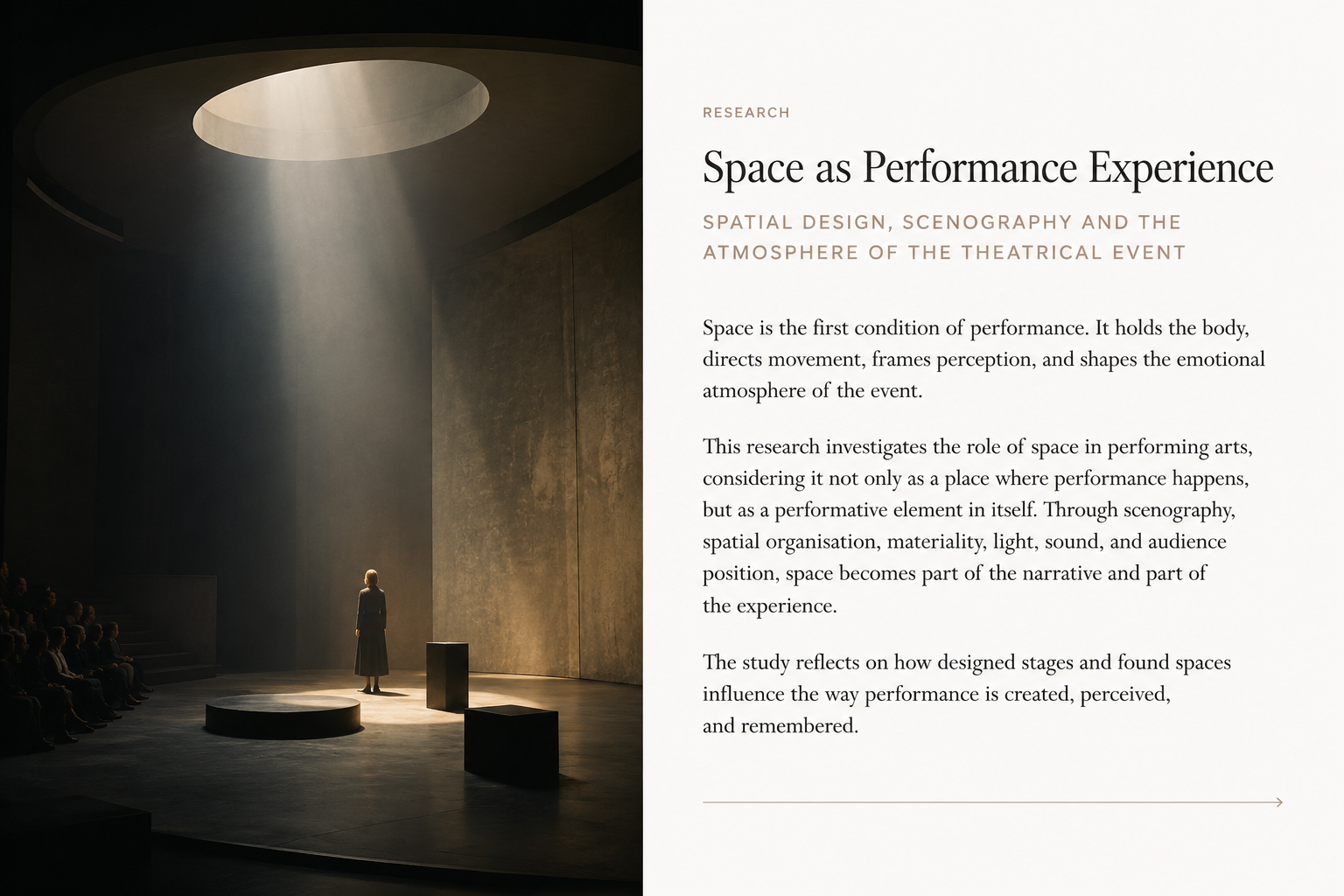
Space is the first condition of performance. It holds the body, directs movement, frames perception, and shapes the emotional atmosphere of the event.
This research investigates the role of space in performing arts, considering it not only as a place where performance happens, but as a performative element in itself. Through scenography, spatial organisation, materiality, light, sound, and audience position, space becomes part of the narrative and part of the experience.
The study reflects on how designed stages and found spaces influence the way performance is created, perceived, and remembered.
Depalo, S. “Space as the Integral Aspect of Performance Art”, Politehnika: Proceedings of the Sixth Scientific and Professional Conference, ed. Jelena Zdravković, Belgrade Polytechnic, Belgrade, 2019, pp. 966–971. ISBN 978-86-7498-087-3, 2021.
the colour of light
James Turrell and the Poetics of Interior Lighting Design
The Colour of Light: James Turrell and Interior Lighting Design
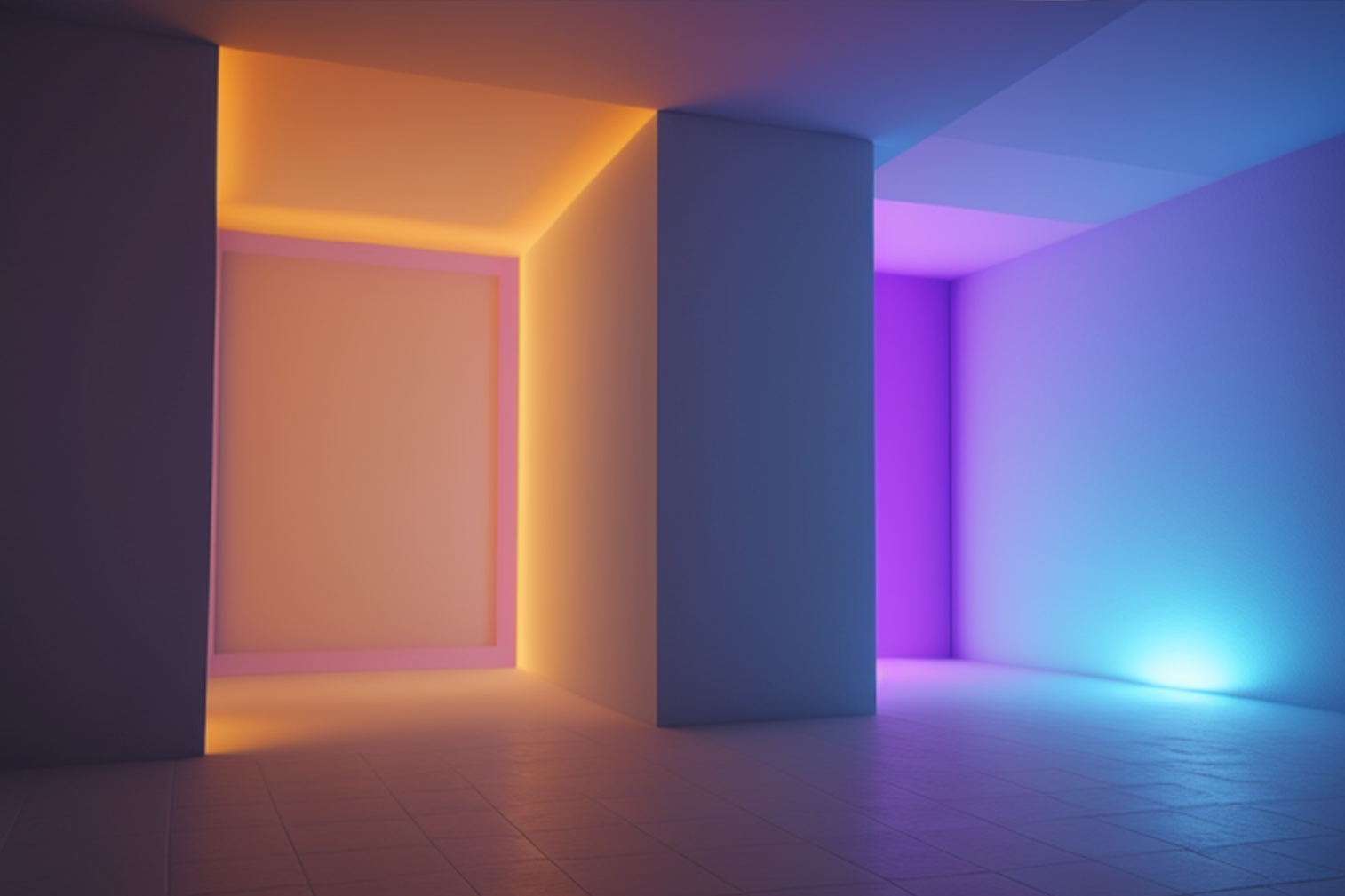
James Turrell’s work reveals light as something to be experienced, not simply used. In his Skyspaces and immersive installations, light becomes a living material : silent, atmospheric, and deeply connected to perception.
This research examines how Turrell’s approach can inform contemporary interior lighting design, where illumination is not only functional, but emotional and spatial. Light can soften boundaries, alter scale, change the mood of a room, and create a sense of presence. It can transform interiors into places of stillness, contemplation, and sensory awareness.
Through this perspective, lighting design becomes a poetic practice: a way of shaping atmosphere, perception, and the inner experience of space.
DEPALO S., The colour of light: influence of James Turrell’s work on contemporary interior lighting design, International Scientific and Professional Conference Politehnika 2025, Thematic Section Editors, Belgrade: The Academy of Applied Studies Polytechnic, 2025, pp 816-822, ISBN 978-86-7498-146-7
light as material
Reflection, Transparency and the Materiality of Light
The Materiality of Light
This potential research examines the relationship between light and materiality in interior and spatial design. It considers how light, although physically intangible, acquires spatial and sensory presence through the materials that interact with it.
The study would focus on materials that reflect, transmit, refract, diffuse, filter, or absorb light, such as glass, onyx, polished metal, water, textiles, colour surfaces, and translucent architectural elements. Through these interactions, light becomes an active design medium capable of shaping atmosphere, perception, texture, and spatial depth.
The research positions light not only as a technical component of illumination, but as a material force that transforms the way interiors are seen, felt, and experienced.
Atmosphere and spatial perception
Light as a Medium of Emotional and Sensory Experience
Light as a Medium of Emotional and Sensory Experience
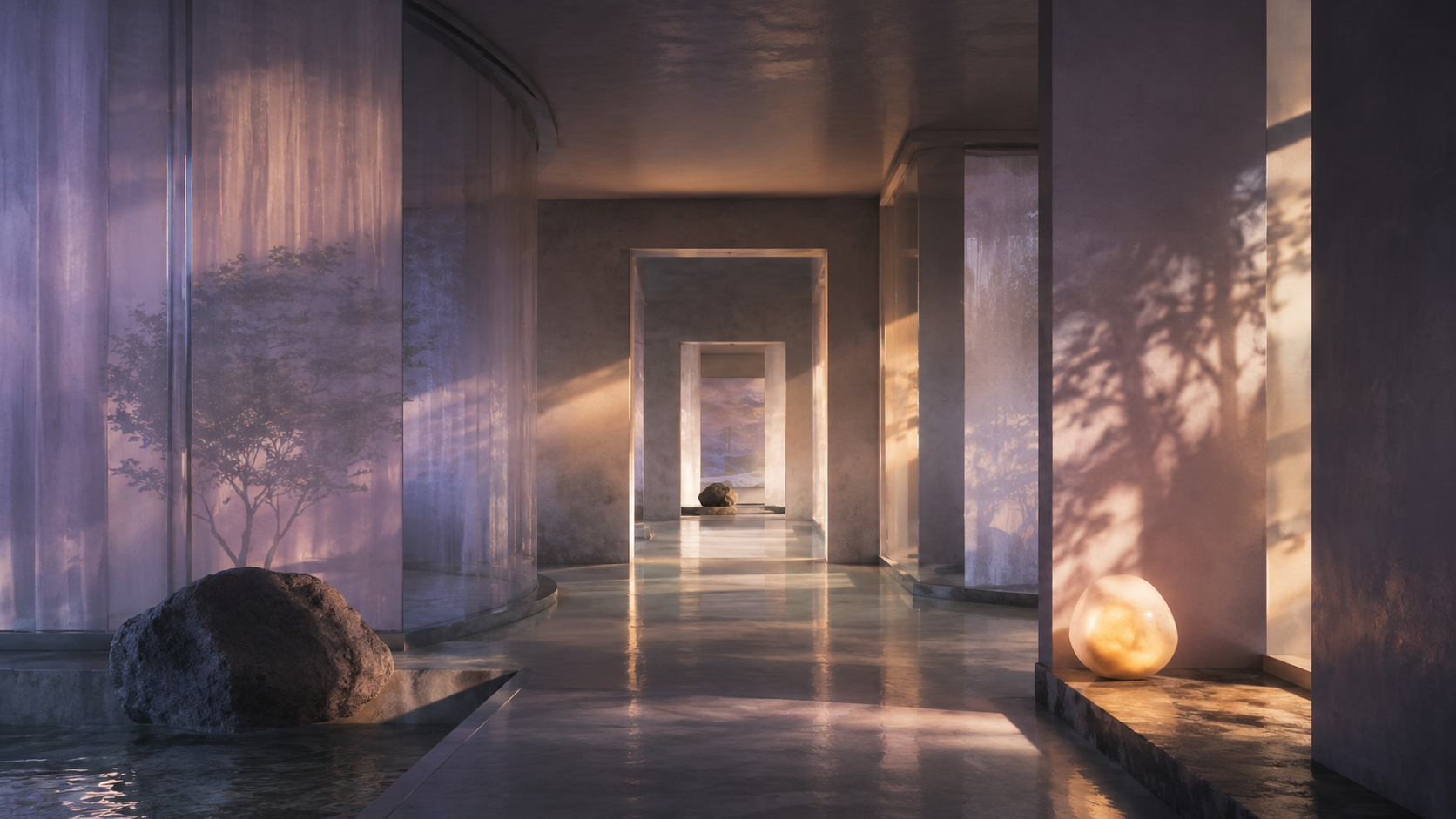
Atmosphere is the invisible quality through which space becomes emotionally present. It is shaped by light, shadow, material, colour, sound, proportion, and movement, elements that influence not only how a space is seen, but how it is felt.
This research investigates the relationship between light and spatial perception, considering how subtle changes in illumination can transform the identity and emotional tone of an interior. Light can make space appear open or intimate, calm or dramatic, still or dynamic. It gives form to atmosphere and allows interiors to communicate beyond function.
In this sense, light becomes a poetic instrument of perception: shaping the way we experience, remember, and connect with space.
the poetics of light in interior design
The Experience and Perception of Light Colour in the Spatial Context
The Experience and Perception of Light Colour in the Spatial Context
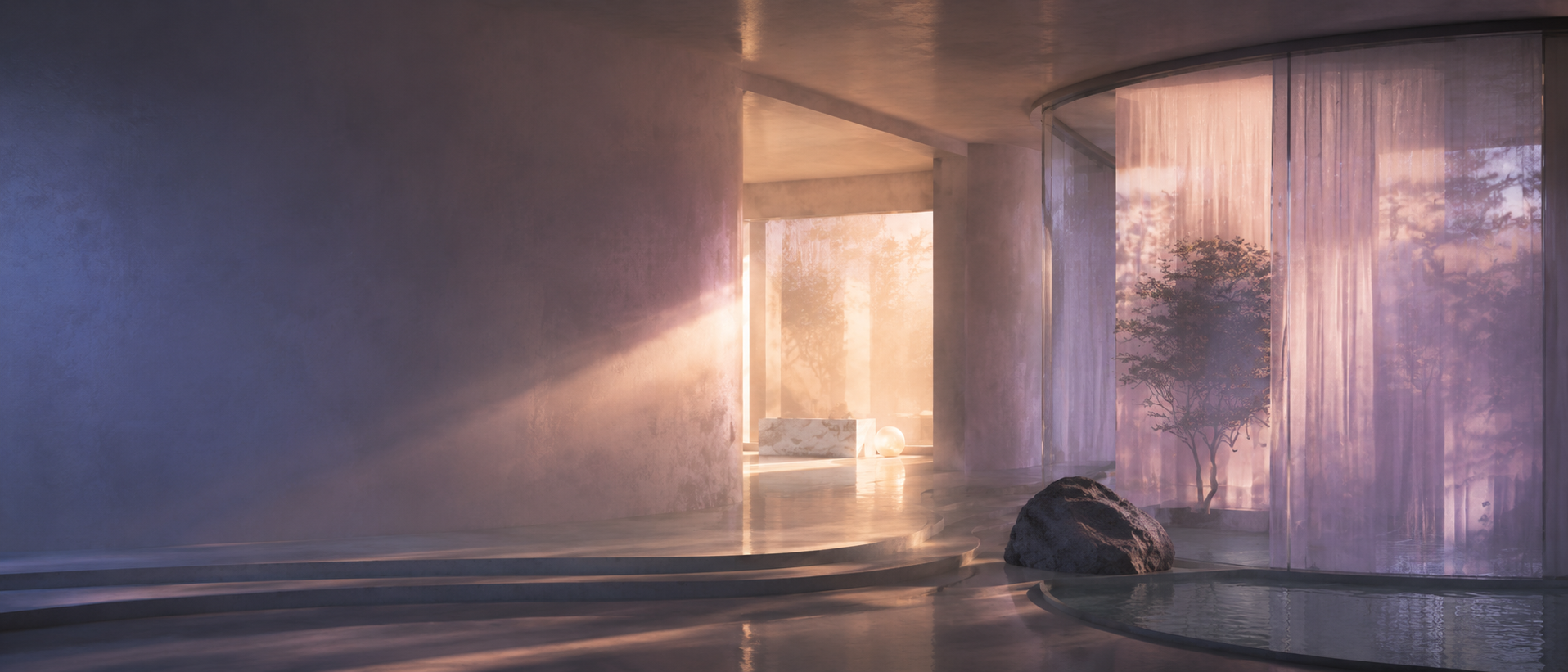
Light is not only a condition of visibility, but a medium through which space becomes alive. In interior design, the colour of light has the ability to transform atmosphere, guide perception, and shape the emotional identity of a place.
This research examines how light colour influences the experience of space on both a visual and sensory level. Drawing from scientific principles, colour theory, and phenomenological thought, it explores the relationship between measurable light and subjective perception.
The study approaches light as both a technical and poetic material , one that defines form, evokes emotion, and creates a deeper dialogue between the interior, the body, and the senses.
DEPALO S., The experience and perception of the light colour in the spatial context, International scientific and professional conference POLITEHNIKA 2023, Belgrade, 15.12.2023., pp 644-649, ISBN-978-86-7498-110-8
museum lighting
Light Narratives
Adaptive Museum Lighting as Spatial Communication
Light Narratives: Adaptive Museum Lighting as Spatial Communication
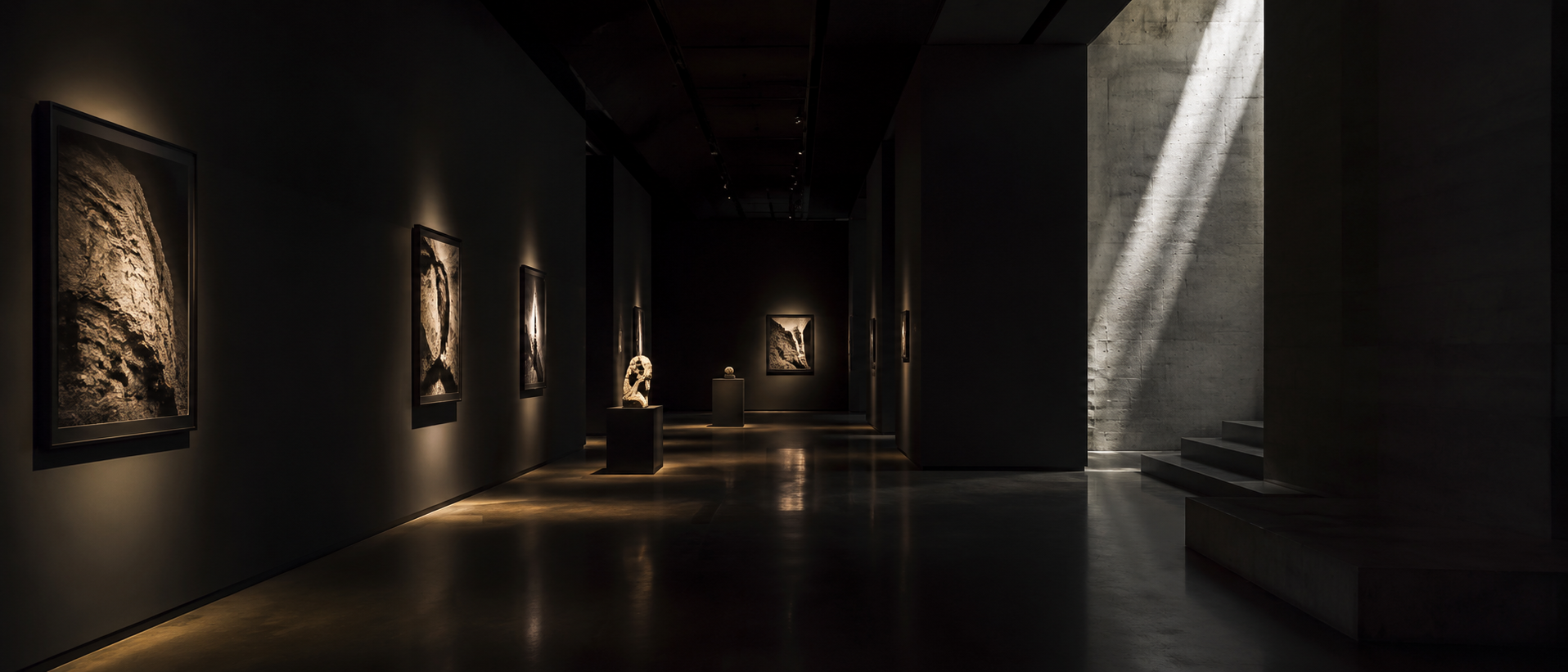
This research investigates the role of adaptive lighting in contemporary museum environments, where light is no longer understood only as illumination, but as a narrative and poetic medium.
In museum spaces, light can reveal, conceal, direct, pause, and intensify. It creates atmospheres, evokes memory, and shapes the rhythm of perception. Through subtle changes in brightness, shadow, colour temperature, and movement, adaptive lighting systems allow exhibitions to respond to the visitor, the artwork, and the unfolding experience of space.
The project approaches light as a silent form of communication; technical in its structure, yet deeply emotional in its effect.
DEPALO S., Light narratives: adaptive museum lighting as a medium of artistic expression and communication, International Scientific and Professional Conference Politehnika 2025, Thematic Section Editors, Belgrade: The Academy of Applied Studies Polytechnic, 2025, pp 823-829, ISBN 978-86-7498-146-7